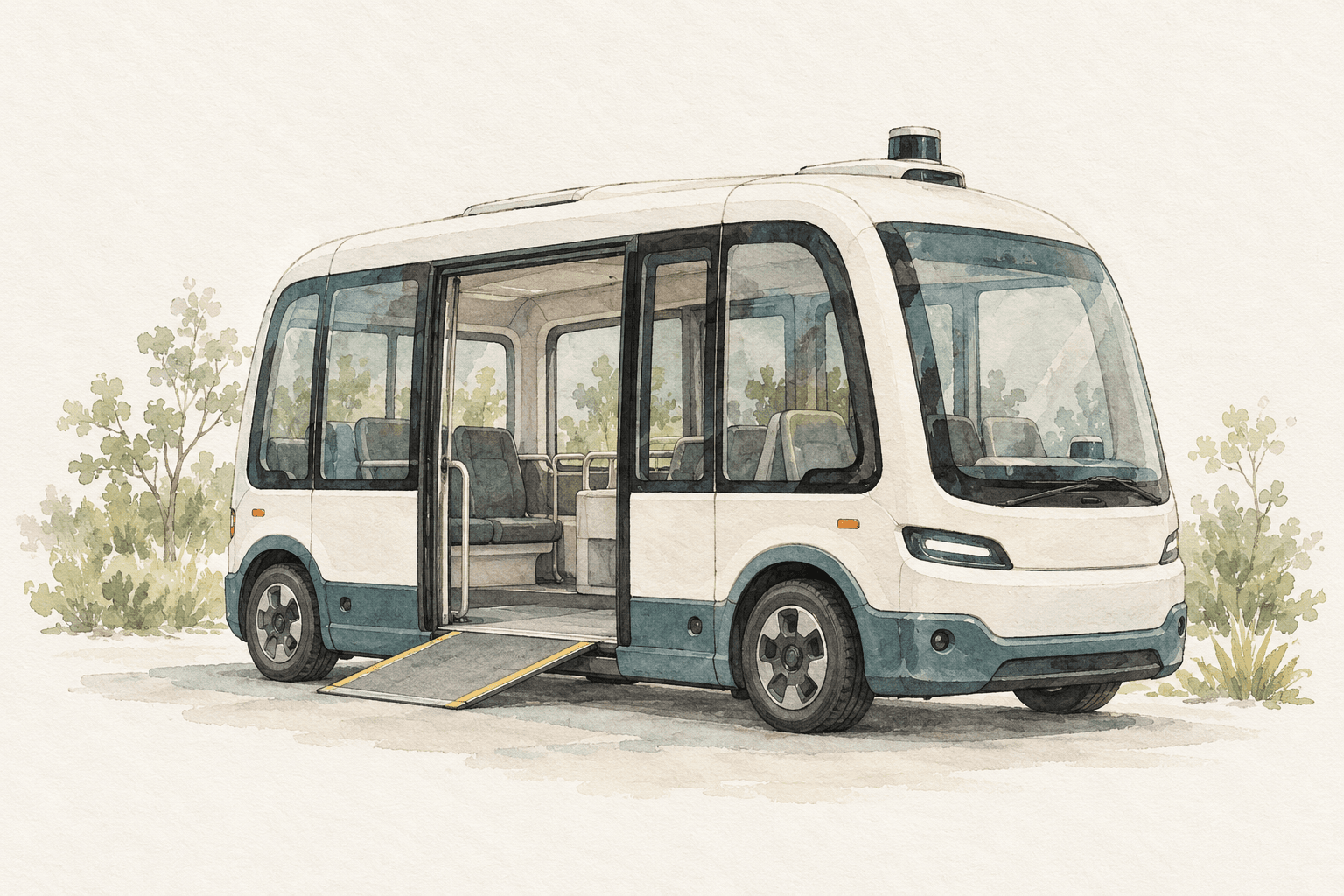
Starting point
Designed use cases for how people with mobility challenges would use autonomous transport. Connected real users' experiences to the vehicle-design team and examined local accessibility alongside operating data.
How the work unfolded
- 01
Use-case design
Mapped how users would interact with the vehicle and service.
- 02
User trials
Recruited participants to experience the pilot vehicle directly.
- 03
Feedback analysis
Collected feedback and identified necessary improvements.
- 04
Partner handoff
Communicated requirements to the vehicle-design organization.
My role & contributions
- Designed use cases for an accessible mobility service.
- Recruited participants with mobility challenges for pilot-vehicle trials.
- Analyzed trial feedback and communicated improvement requirements to the vehicle-design team.
- Conducted a full survey of accessibility facilities in the pilot region.
- Combined field-survey findings with three years of accessible-taxi operating records to select pilot routes.
Outcomes & changes
- Translated user-trial feedback into design requirements, leading to an interior support rail being installed.
- Selected pilot routes based on three years of operating records and a complete local accessibility survey.
- Co-authored two related academic papers.